
Reduction of High Numbers
Do statistics even shock us anymore? Is desensitization reversible? Written by Lala

Let’s get into it. I had this topic pop into my head during a conversation with a friend about how no one needs 1 billion (of any stable currency).
What does the reduction of a high number even mean? You may ask.
According to Lala (me) and general wisdom, it’s the perception of a usually high statistic from a near-sighted point of view, therefore reaching a result lower than the original statistic. What were the ‘high’ numbers when we were growing up? Hundreds? Thousands? Millions? Billions? Ten?
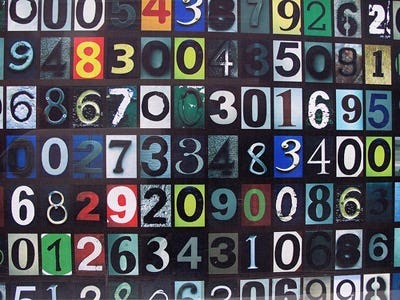
In “A Small Problem with Big Numbers,” by Shreyas Kamath, he discusses how the human mind cannot comprehend large numbers:
“Even from an evolutionary perspective, our palaeolithic ancestor did not have to worry about large numbers ... or numbers. Early humans only really needed to get a basic sense of small batches of quantities, like the number of people in the clan, or how many animals might occupy a certain area or other cavemanly concerns.
We managed to get better at counting…but big numbers still baffle us.
Despite this cognitive set-back, we are surrounded by ginormous numbers every day and are expected to make sense of it. Be it the latest pandemic figures, budget proposals by your government, the latest news, scientific research and other things that we pretend to read and understand to sound smart.”
Desensitization is a psychological term related to a process that diminishes emotional responsiveness to a negative or aversive stimulus after repeated exposure. This process typically occurs when an emotional response is repeatedly triggered, but the action tendency associated with the emotion proves irrelevant or unnecessary.
A study by Jeanne Funk Brockmyer on Desensitization and Violent Video Games: Mechanisms and Evidence, states that:
“Desensitization, the reduction of cognitive, emotional, and/or behavioral responses to a stimulus, is an automatic and unconscious phenomenon often experienced in everyday life. Exposure to violent media, especially violent video games, may cause desensitization to real-life violence.”
When we look at numbers on social media now, a thousand sounds like 10 and a million sounds like a hundred. Having 100 likes on a post seems so small until you’re a gorilla and you see a hundred people charge at you over a speculative idea.
Death statistics— yes, we will talk about this—We see the numbers amass day by day, but we have been desensitized to it because we see and hear about it so much, it looks so unimportant.
Using a current problem, Palestine. 61,709 is the number of dead people at the moment, according to Al Jazeera (dated May 22nd, 2025)
It looks pretty small compared to the usual numbers we see every day, right?
Let’s put it into perspective: 61,709 people could almost fill a large football stadium— for example, that’s about the size of a big match crowd at places like Anfield (Liverpool), where the seating capacity is 61,276. Check the picture below for reference.
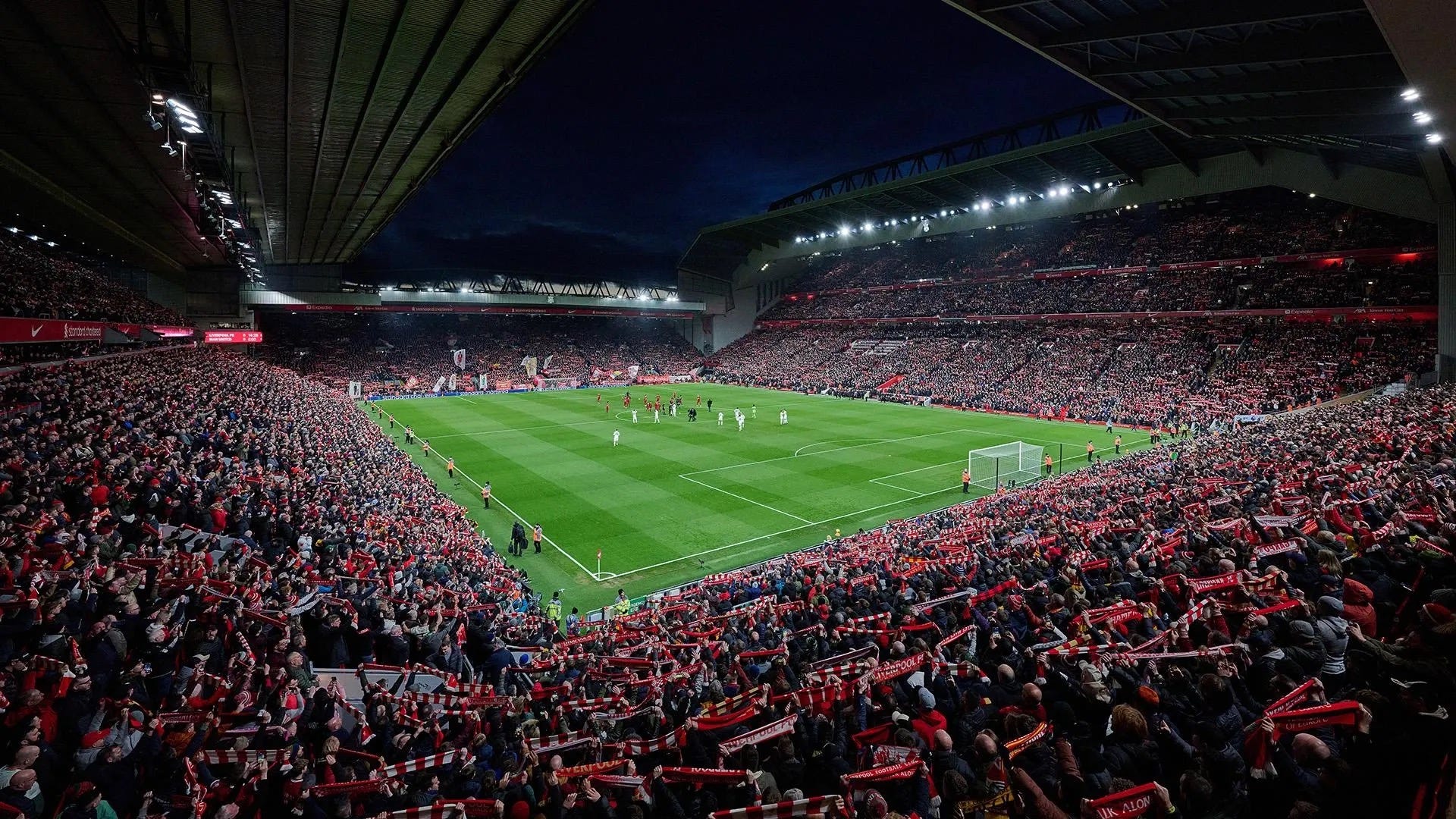
Now imagine having 61,709 followers on Instagram. Imagine standing at the center of a stadium filled with 61,709 people, creating your usual get-ready-with-me (GRWM) content. I doubt you’d be able to get ready.
In an article, released 19 December 2024, 2:24 pm GMT, a group chat in Germany was found with around 70,000 men learning tips on how to drug women and abuse them. That’s more than the entire population of Guernsey, Europe. Do you know what 70,000 looks like?
You don’t?
Really?
Let’s go back to that picture.
Now, let’s divert from that topic— The knowledge of 70,000 men learning tips like that terrifies me.
Let’s talk about something we all know and love— No, not me, y’all are making me blush. MONEY!
We all love money. Well, we love having it. Why? Capitalism!
Money is one of those things that has been put out of perspective because a lot of people lack the amount of money they look forward to having. You see these questions all over the internet- What would you do if you had a million dollars?
Then the answers pour in like clockwork.
People talk about buying their favourite things, a car, a house, food, clothes, and jewelry. You name it.
Though a million dollars could cover it, think of how much would be left.
The median price of a 5-bedroom house in less luxurious cities in America is $315,000. A Lamborghini Urus is around $250,000. Now these are obviously very high-end products, but you still have $435,000.
For my Nigerian readers, $435,000 is approximately ₦696,600,969.90 (according to Google 14/05/2025)
If you spend ₦100,000 a month, covering rent, food, transportation, and basic expenses, the money will last about 580 years, which means they would never finish it in a lifetime
At ₦500,000 a month, accounting for some comfort and savings, it would take about 116 years to spend it all.
If you spend ₦1 million a month, living quite comfortably but not excessively, it would take about 58 years.
For my lavish spenders,
If you spend ₦1 million a day on luxury items, vacations, cars, and entertainment, it would be gone in about 697 days (just under 2 years).
At ₦5 million per week, covering high-end restaurants, designer clothes, and exclusive events, about 139 weeks (a little over 2.5 years).
And at ₦20 million per month, including extravagant real estate purchases, luxury cars, and frequent international trips, it would last about 34 months (almost 3 years).
(Don’t forget this is just a spend for $435,000, not a million dollars)
I made a poll on Twitter (now called X, can’t believe I have to call it that) and asked the question: “How long do you think a million dollars would last you?”
24 hours later, with 64 responses, the highest result was 41% for less than 10 years and 38% for less than 3 years. A lot of lavish spenders on my timeline, wow.
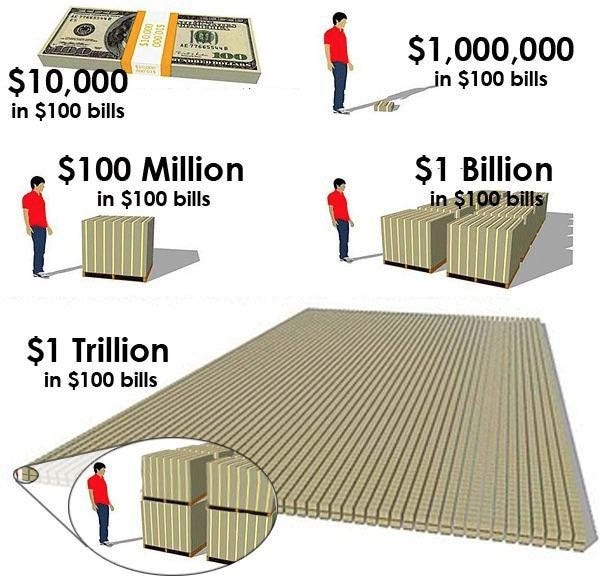
Money is something we have been desensitized to due to the rise in capitalism and increased inflation rates. In 2005, the price of a 1-bedroom flat in Abuja could range from ₦60,000 to ₦96,000, and 20 years later, a general estimate for the average price of a one-bedroom flat for rent in Abuja is around ₦2,000,000, that’s approximately a 2000% increase. This drastic increase explains why certain amounts of money don’t sound a valuable as it was before.
We could go on and on about the ways numbers are losing their value in our subconscious mind, but the question now is, can we reverse that?
In a popular Reddit community r/explainlikeimfive, a user TaxThrowAway000 asked the question:
Once you become desensitized to something (sex, violence, etc), is it possible to reverse the process, or are you basically scarred for life?
And the replies came in, from two users:
I’m not an expert on this but desensitization is believed to be a type of pavlovian conditioning (Systematic desensitization source). You may or may not know this already, but Pavlov’s classical conditioning theory was based on his studies with his dogs, who were conditioned to salivate upon hearing a bell ring (after being exposed to ringing bells whenever food was served). After some time since the study was stopped, the dogs stopped salivating whenever the bell rings which implies that constant exposure to reinforcement is required for conditioning to be maintained. Applying this to the situation of the question, we can theorize that if a person has removed all forms of exposure to what they have been desensitized to (which may be extremely harder than you think especially if the desensitization didn’t happen on purpose and lots of factors contribute to the reinforcement of the desensitization), then the process could be reversed.
Just to add on to your answer yes you can lose a conditioned response if the original stimulus in this case food stops being presented with the trigger (the bell) enough times but the reconditioning happens in a fraction of the original time. So the dogs after losing their conditioned response would be reconditioned into it shortly after the food was then presented along with the bell.
If this logic is applied to desensitization, resensitization to these stimuli (sex, violence, etc.) is possible if you are not exposed to them for long enough. But once exposed, you could become easily desensitized again. In the world today, when the statistics are growing higher and getting worse, reversing desensitization would be very hard to do.
In conclusion, I advise people to notice how noticeable patterns from society and the government at large work to make us desensitized to events we ought not to be desensitized to, using platforms like social media, the press, and other channels of information. Desensitized citizens generate a cloud of ignorance towards chaotic events, whether inflation, death tolls, or the loss of a coin. Things stop mattering, and that is a recipe for disaster.
Smell you later!
Lala
About the Writer:
Hi! I’m Lala. I read, write, and do fun things. You can find out more about me and read more of my work on my Substack and Medium.
I loved this! A lot of people really don’t realize the lengths that desensitization can reach. (p.s I also can’t believe we have to call it X either 🙄)